

Mate is an infusion prepared with the dried leaves of Ilex paraguariensis that serves as a cornerstone of social and cultural life in Argentina. Far more than an antioxidant-rich herbal beverage, it embodies fellowship, equality, and hospitality across all levels of society. Understanding its historical roots and traditional etiquette allows international visitors to appreciate one of the most authentic customs of the region.
Historical origins: from Guaraní heritage to national Identity
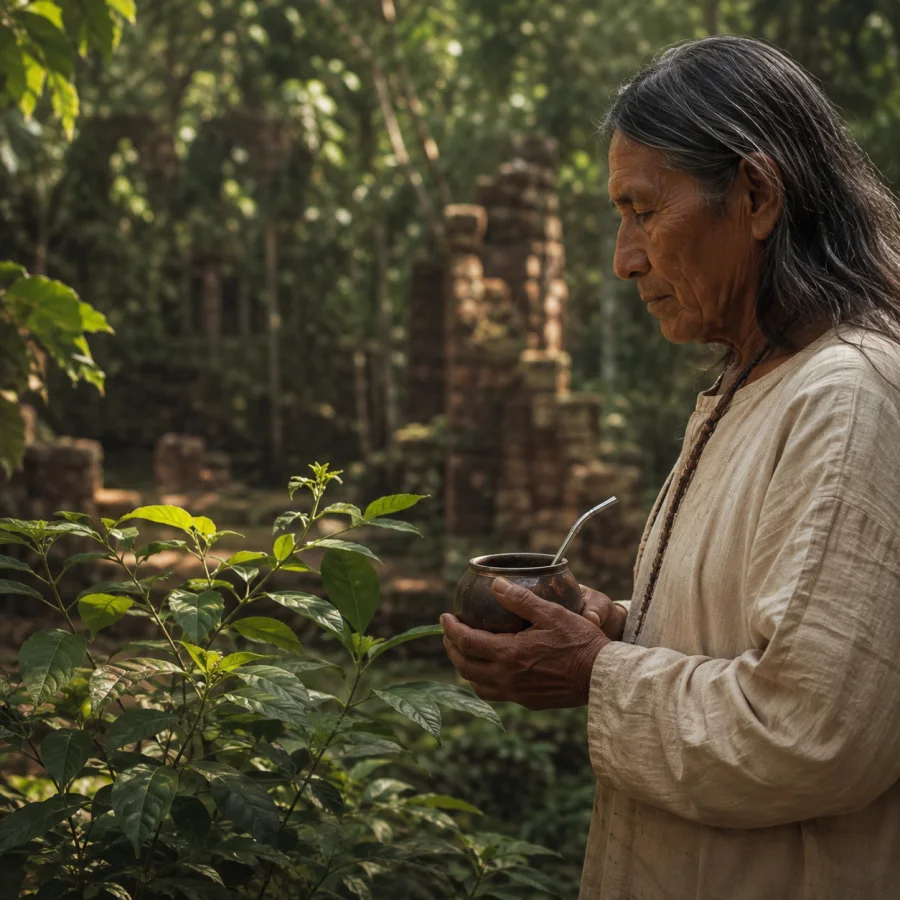
The history of mate traces back to the Indigenous Guaraní people, who consumed the leaves raw or infused, attributing revitalizing and sacred properties to the plant. They referred to the tree as caá and the gourd as caiguá. For the Guaraní, the plant was not merely a source of endurance during long journeys, but a divine gift closely tied to community life and reverence for nature.
In the 17th century, Jesuit missionaries systematically cultivated Ilex paraguariensis, optimizing seed germination and commercial distribution. Despite early attempts by colonial authorities to ban its consumption, mate drinking spread rapidly among Criollos, Gauchos, and urban elites. By the 19th century, mate had established itself as a unifying element of Argentine identity, enjoyed equally in the patrician parlors of Buenos Aires and across the vast estancias of the Pampas.
Essential components and the art of preparation
Preparing a traditional mate requires technical precision to preserve its delicate flavor profile and avoid scalding the leaves. The fundamental setup includes:
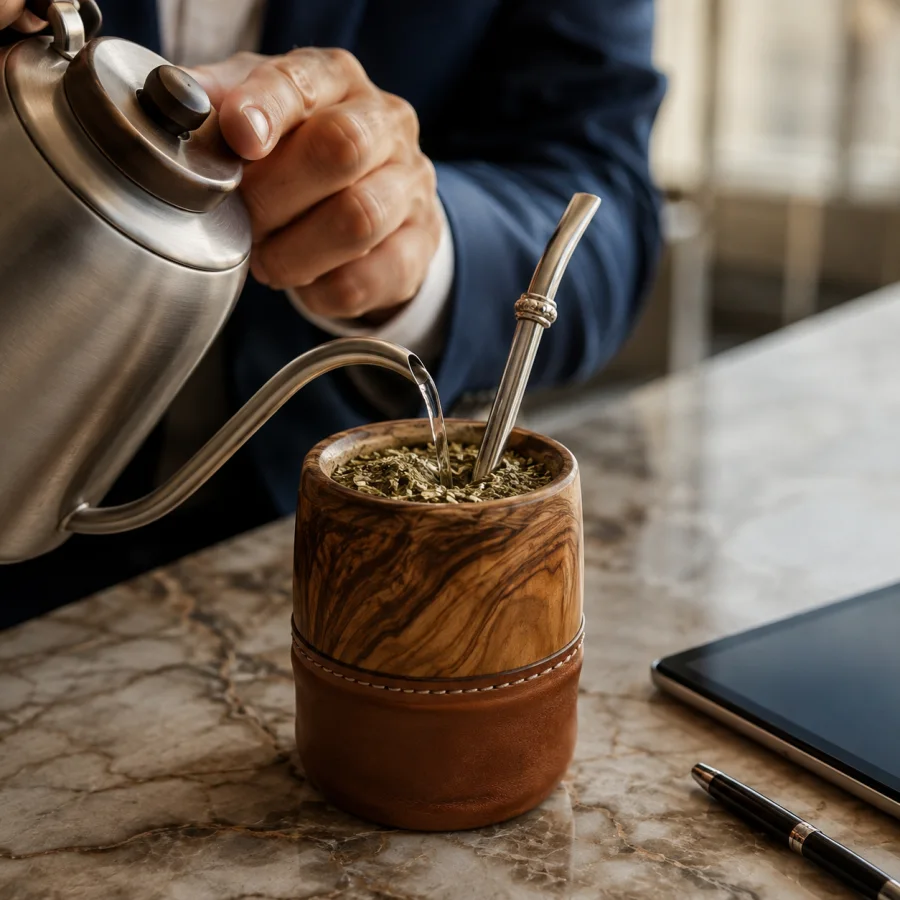
- The gourd (Mate): Traditionally crafted from cured calabash squash (Lagenaria siceraria), though fine hardwoods such as Palo Santo, ceramics, and precious metals are also used.
- Yerba mate: Aged, dried leaves and twigs. Varying proportions of leaves, stems, and dust determine the blend's intensity and body.
- The bombilla: A metal straw—often crafted from German silver or sterling silver—equipped with a filter at the base to prevent leaf fragments from passing through.
Water: Kept strictly within a temperature range of 70 °C to 80 °C (158 °F to 176 °F). Boiling water must be strictly avoided, as it scalds the tea and ruins its aromatic notes.
To prepare, fill the gourd three-quarters full with yerba mate, tilt it at an angle to create a slope, and gently pour a small amount of lukewarm water into the hollow. Once the bombilla is inserted into the dampened base, continuous pourings of warm water sustain the cycle.
Social protocol and etiquette when sharing mate
Sharing mate is a collective experience guided by unwritten codes of courtesy and respect:
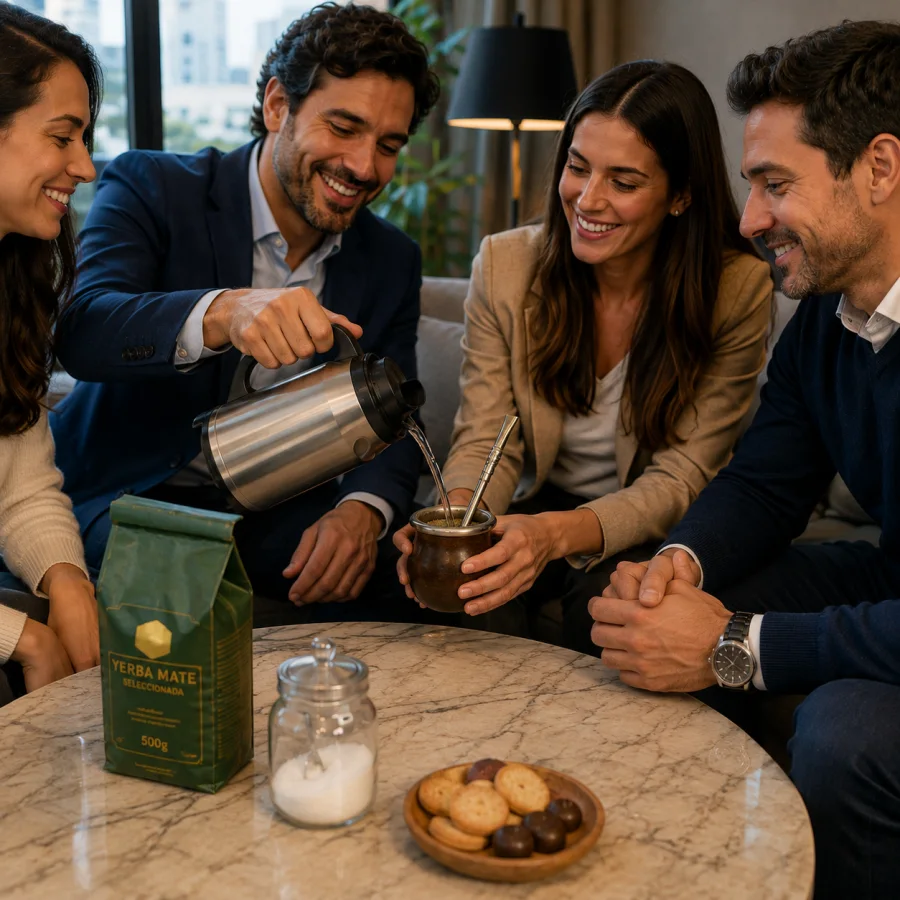
- The role of the cebador: A single designated host (the cebador) pours the water and passes the gourd around the circle. Attempting to pour water or serve oneself disrupts the flow of the ritual.
- Keep the straw still: Once the bombilla is set in place, it should never be stirred or moved. Shifting the straw clogs the filter and ruins the structure of the yerba bed.
The meaning of "Gracias": When handed a mate, sip until you hear the characteristic hollow suction sound at the end, then return the gourd to the host. Saying "thank you" (gracias) upon returning the mate signifies that you do not wish to receive any further rounds.
Frequently asked questions
What health benefits are associated with yerba mate? Yerba mate is rich in antioxidants, essential minerals, and polyphenols. It delivers a sustained, smooth energy boost through mateine without the sudden spikes or jitters commonly associated with excess coffee consumption.
Is it appropriate to accept a mate in a business setting? Yes, accepting an offered mate in a professional environment is viewed as a gesture of trust, warmth, and goodwill. If you prefer to decline for personal reasons, doing so politely is fully respected.
Where can visitors experience a guided yerba mate tasting in Buenos Aires? Select cultural spaces and specialized boutiques in neighborhoods such as Recoleta and Palermo offer curated tastings led by specialists who explain regional harvests, aging processes, and pairing notes.
To explore the city's cultural circuits, historic cafés, and culinary venues in comfort and privacy, you can rely on our private executive chauffeur service.
‹ Back to blog