
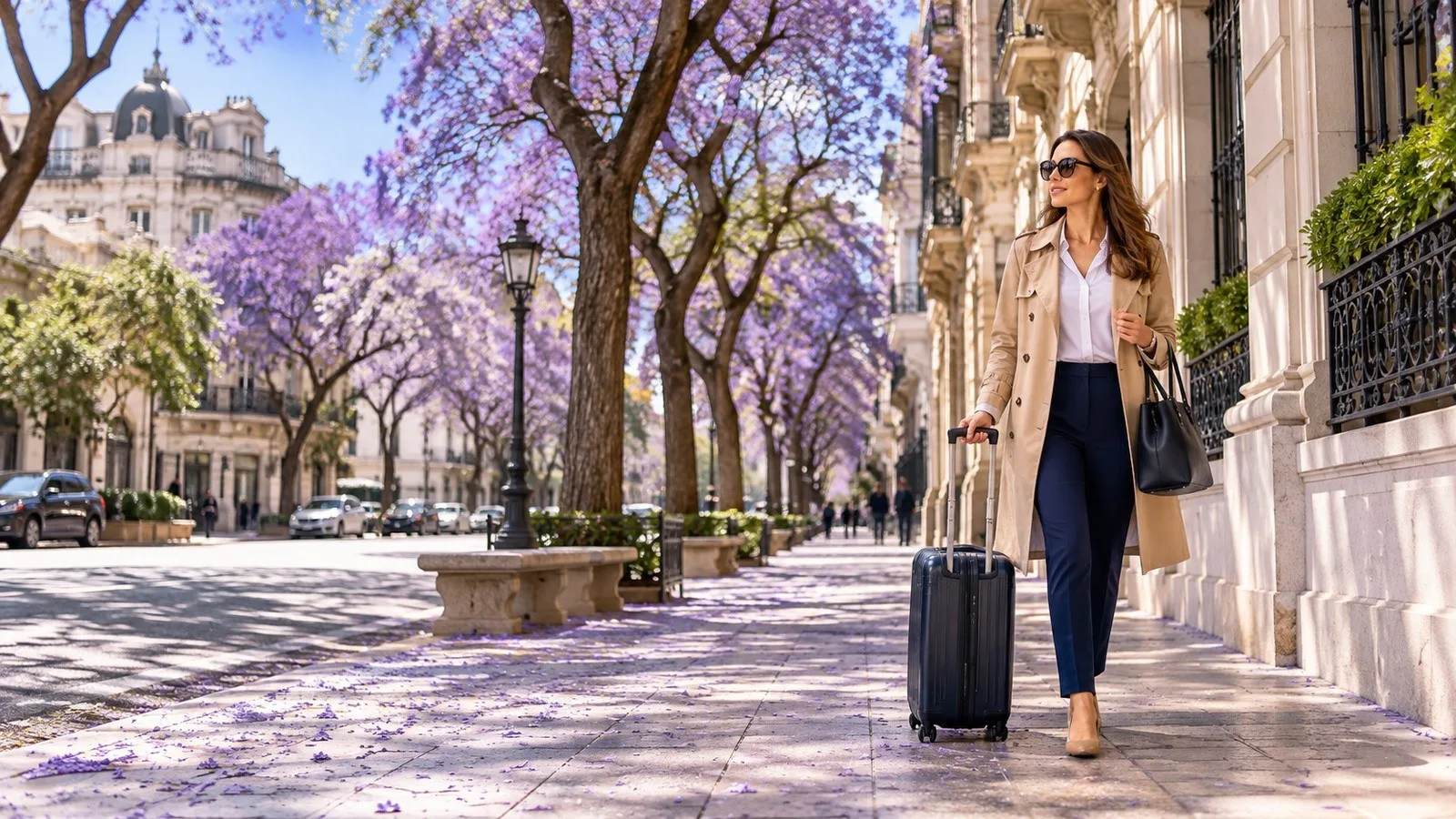
Knowing what to pack for Buenos Aires in spring saves space in your suitcase and trouble on your schedule. Between October and November, the city mixes cool mornings, mild afternoons and rain that arrives with little warning. If you are traveling for work, you also need one suitcase that covers meetings, dinners and free time.
In this guide we bring together what to pack, how to dress for each occasion and the practical details travelers forget most often. At the end you will find a PDF checklist to download and review before you close your suitcase.
What the weather is like in Buenos Aires in October and November
Buenos Aires has a humid, temperate climate. According to the 1991–2020 climate normals of Argentina's National Weather Service (SMN) for the Buenos Aires Central Observatory:
- October: average highs of about 23 °C (73 °F) and average lows of about 13 °C (55 °F).
- November: average highs close to 26 °C (79 °F) and lows of about 16 °C (61 °F).
- Rain: in both months it rains on average 9 to 10 days a month.
In practice, you may leave your hotel wearing a jacket at 8 a.m. and finish lunch in shirtsleeves. In the evening the temperature drops again, and the humidity makes the cool air feel stronger. That is why there is one golden rule: dress in layers.
Check the forecast a few days before your trip and again the night before. The figures above are averages: some days are warmer and some are cooler.
A layered suitcase: what clothes to bring
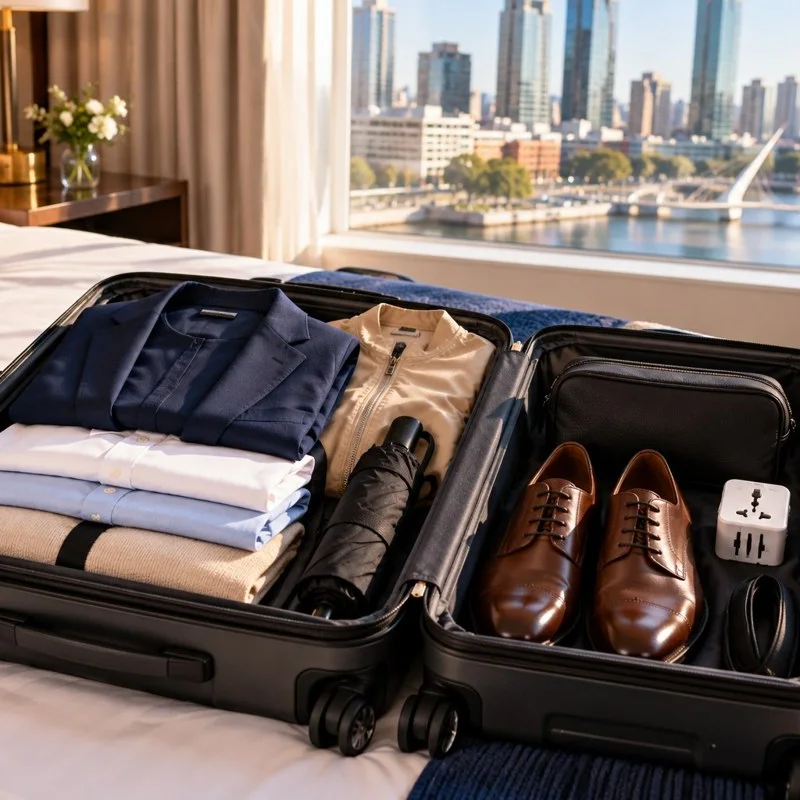
Packing in layers lets you adapt to the day without carrying too much. A base that works for a three- to five-day stay:
- Base layer: light cotton or linen shirts or blouses, plus a T-shirt or two for free time.
- Mid layer: a fine sweater or cardigan, easy to take off and keep in your bag.
- Outer layer: a trench coat, raincoat or light jacket that can handle wind and drizzle.
- Trousers: dress trousers for meetings and a more casual pair for exploring the city.
- For the evening: a blazer or light warm layer, because it gets cool after sunset.
Choose a short palette of colors that go together, such as navy, beige, grey and white. That way each piece works in more than one outfit and your suitcase weighs less.
Dress code: meetings, dinners and free time
In Buenos Aires, business attire varies by sector. As a general guide:
- Finance, law firms and government offices: suits or formal outfits remain the norm, especially for a first meeting.
- Tech companies, agencies and startups: business casual is usual, with a shirt, dress trousers or chinos and sometimes no jacket.
- Business dinners: a middle ground works well, such as a shirt and blazer without a tie or a simple dress. People dine late in Buenos Aires, so an evening layer is essential.
- Free time: comfortable clothes and walking shoes. Buenos Aires is a city you explore on foot, and sidewalks can be uneven.
If you are unsure about a specific meeting, ask your host. It is a common question and avoids surprises.
Shoes: fewer pairs, better chosen
Shoes take up the most space. Three pairs cover almost everything:
- Comfortable dress shoes for meetings and dinners.
- Sneakers or city shoes for walking neighborhoods such as San Telmo, Palermo or Puerto Madero.
- A pair that can handle rain, because spring showers leave puddles.
Wear your bulkiest pair on the plane and save suitcase space for the rest.
What you can't forget: practical items
These are the most common things travelers forget, and the ones that complicate a schedule the most:
- Plug adapter: Argentina uses type I plugs, with two flat pins in a V shape and a third central pin, and the voltage is 220 V. Check that your chargers accept that voltage.
- Folding umbrella: light and easy to carry in your bag.
- Sunglasses and sunscreen: the spring sun is strong even when the temperature is pleasant.
- Power bank in your carry-on: never in checked luggage.
- Documents: a valid passport or ID, bookings printed or saved offline and your hotel's contact details.
- Regular medication in your carry-on, with a prescription if needed.
Before you close your suitcase, check your flight
If you arrive in or leave Buenos Aires between October 25 and November 11, 2026, keep in mind the works at Ezeiza International Airport: during that period it operates with a single runway of about 1,850 meters. Some airlines suspend flights and others add a technical stop, which may change your arrival time.
Check your booking on your airline's website or app even if it shows as confirmed. For airline-by-airline details, we published a full guide to the Ezeiza works on our blog.
Arrival: luggage and transfer
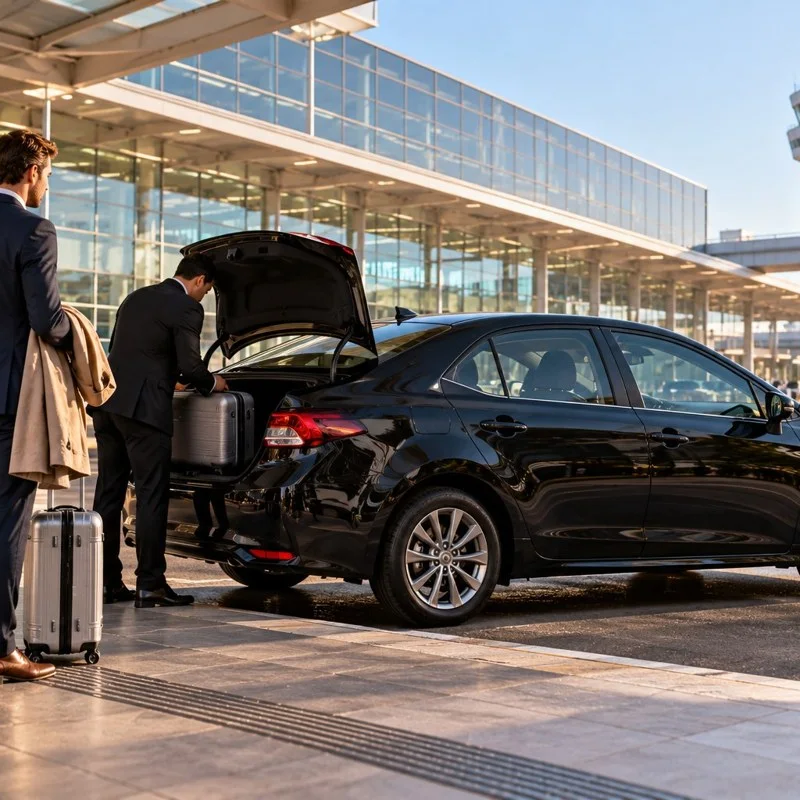
With your luggage ready, arrival is the last step. Ezeiza is about 35 kilometers from downtown, and Aeroparque is just minutes from Palermo. If you are traveling with a large suitcase, a briefcase and a coat in hand, it pays to have your transfer arranged before you land and avoid carrying your luggage on public transport.
At Aryes Traslados we arrange your transfer from Ezeiza or Aeroparque around your confirmed flight time. The driver waits for you and takes care of your luggage, so you reach your hotel without having to think about it.
Frequently asked questions
What clothes should I bring to Buenos Aires in October?
Clothes you can layer: light shirts, a fine sweater and a light jacket that handles wind and rain. Average highs are around 23 °C and lows around 13 °C, so mornings and evenings are cool.
Do I need a suit for a business meeting in Buenos Aires?
It depends on the sector. Suits remain the norm in finance, law firms and government offices; in tech companies, business casual is usual. When in doubt, ask your host.
What plug is used in Argentina?
Type I, with two flat pins in a V shape and a third central pin, at 220 V. Bring an adapter and check that your chargers accept that voltage.
Does it rain a lot in Buenos Aires in spring?
In October and November it rains on average 9 to 10 days a month. Rain usually comes as showers, so a folding umbrella and a light water-resistant jacket cover most situations.
https://drive.google.com/file/d/16qG3dYgbMu4OI7iSLKEAFbEcfjebEGbD/view?usp=sharing
A checklist to print or keep on your phone, with everything worth bringing to Buenos Aires in spring.
Arriving in Buenos Aires soon? Message us on WhatsApp at +54 9 11 2303-6197 and we will arrange your transfer from Ezeiza or Aeroparque around your flight time.
‹ Back to blog